From the very beginning, Trinity has been committed to providing orthodox theological education that would impact the practical daily ministry of the local church. Our first Dean and President, the Rt. Rev. Alfred (Alf) Stanway, served as a missionary to Kenya for several decades prior to coming to Ambridge. During that time, a primary focus of his ministry was training up indigenous clergy and laity, to carry out the work of the Gospel in East Africa.
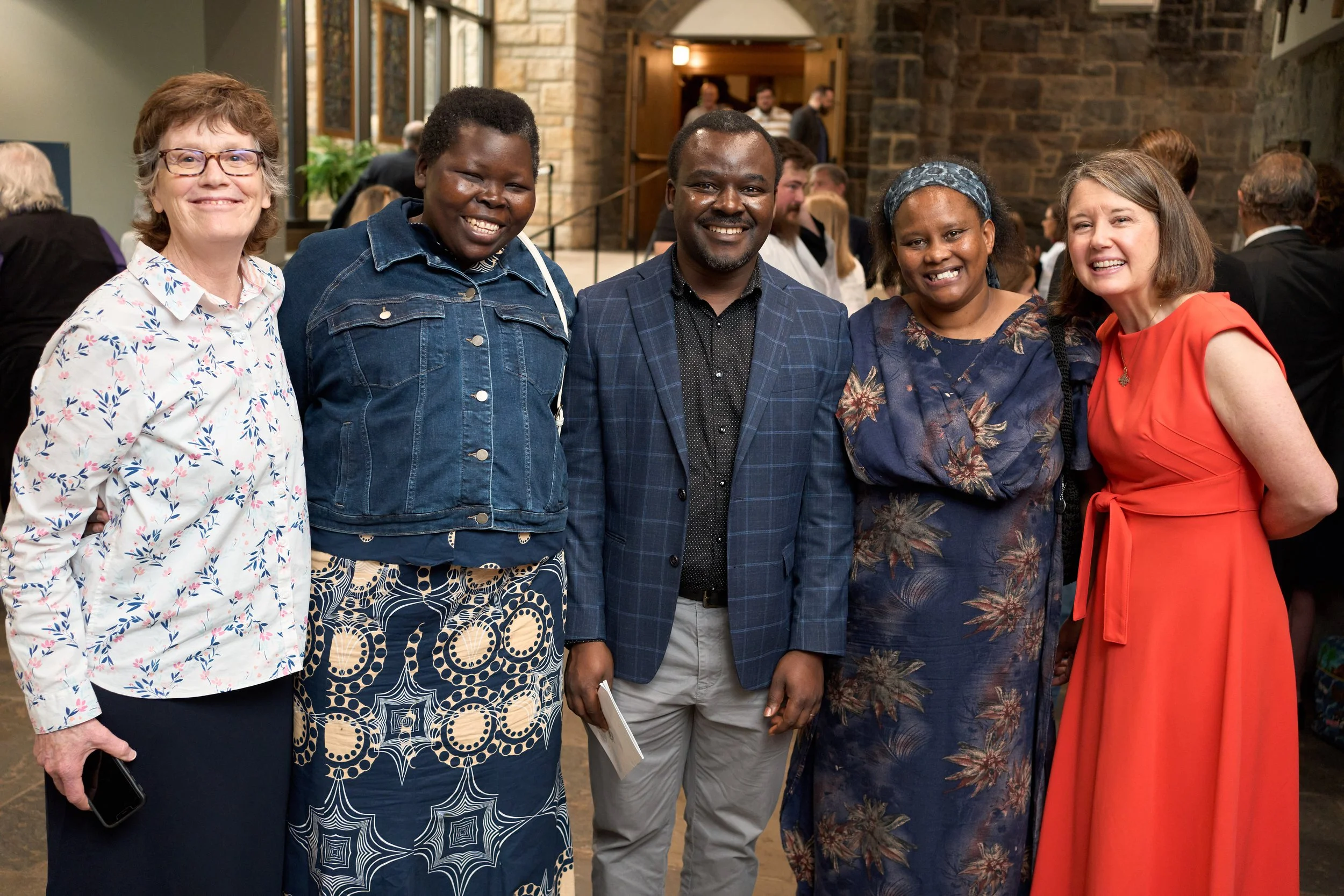
TSM Graduation '99
To honor his ministry and vision, the Stanway Institute for World Missions and Evangelism was established in 1989 to equip church leaders from around the globe alongside future missionaries and church planters from North America. Over the years, the Stanway Institute has ensured that the Great Commission of our Lord is never far from the hearts and minds of Trinity’s faculty, staff, and students.
In 2015, a group of friends of Trinity gathered to honor one of our Emeritus Trustees, Hugo Blakingship, who had been raised in Cuba, where his father served as bishop. Part of the celebration was to establish the Hugo Blankingship Jr. Scholarship Fund in order to support the development of theological training in Spanish. Thus, in 2017, the Spanish Academic Program (SAP) was born, under the leadership of the Rev. Ernest Buchanan. The primary strategy was to develop the SAP as the premier Anglican graduate and clerical training program for Spanish-speaking students both domestically and abroad. The current coordinator of that program, a Trinity Alumnus, shares this story:
The Spanish Academic Program
For five decades, Trinity Anglican Seminary has preserved and passed on many of the riches of orthodox Christianity by forming ministers within the evangelical Anglican tradition. This work began locally and, for many of us, personally. Under faithful faculty, supported by generous scholarships and shaped by rigorous scholarship, students develop enduring habits of prayer and disciplined theological reflection. Trinity has sought to carry this treasury beyond the English language transcending any single culture. We have deliberately moved from a “West to the rest” standard toward a fellowship of learning in which the Gospel is received, owned, and articulated within particular cultural contexts so that the Church’s common confession becomes clearer and deeper and more faithfully lived out.
This vision has taken concrete form through the Spanish Academic Program (SAP), through an online format that has served Spanish-speaking Christians—Anglican and from other traditions—across Argentina, Colombia, Cuba, the Dominican Republic, Ecuador, Mexico, Paraguay, Peru, Spain, Uruguay, Venezuela, and, closer to our residential facilities, Canada, Puerto Rico, and the United States. In just over a decade, seventy-five students have completed at least one course in Christian Ministry or Anglican Studies, and an additional 127 learners have participated in our free summer offerings in Biblical Theology, Introduction to the Old Testament, and The Gospel in the Book of Revelation. Beyond formal instruction, the SAP extends Trinity’s resources by translating academic materials and liturgies, subtitling Wednesday Eucharistic sermons by faculty and guest preachers, and translating Advent and Lent devotionals. Our aim is not one-way transmission, but the mutual correction and gift-giving commended by Lesslie Newbigin, who wrote, “We need their witness to correct ours, as indeed they need ours to correct theirs. ... whether it is we or they, we imperatively need one another if we are to be faithful witnesses to Christ,” (Foolishness to the Greeks, 147). As believers receive and live out the Gospel within their own contexts, they will offer insights that enrich the West—and, by God’s grace, serve the good of the whole Church and the world.
–David O. Zamora R., Director of Language Academic Programs and Coordinator of the Spanish Academic Program
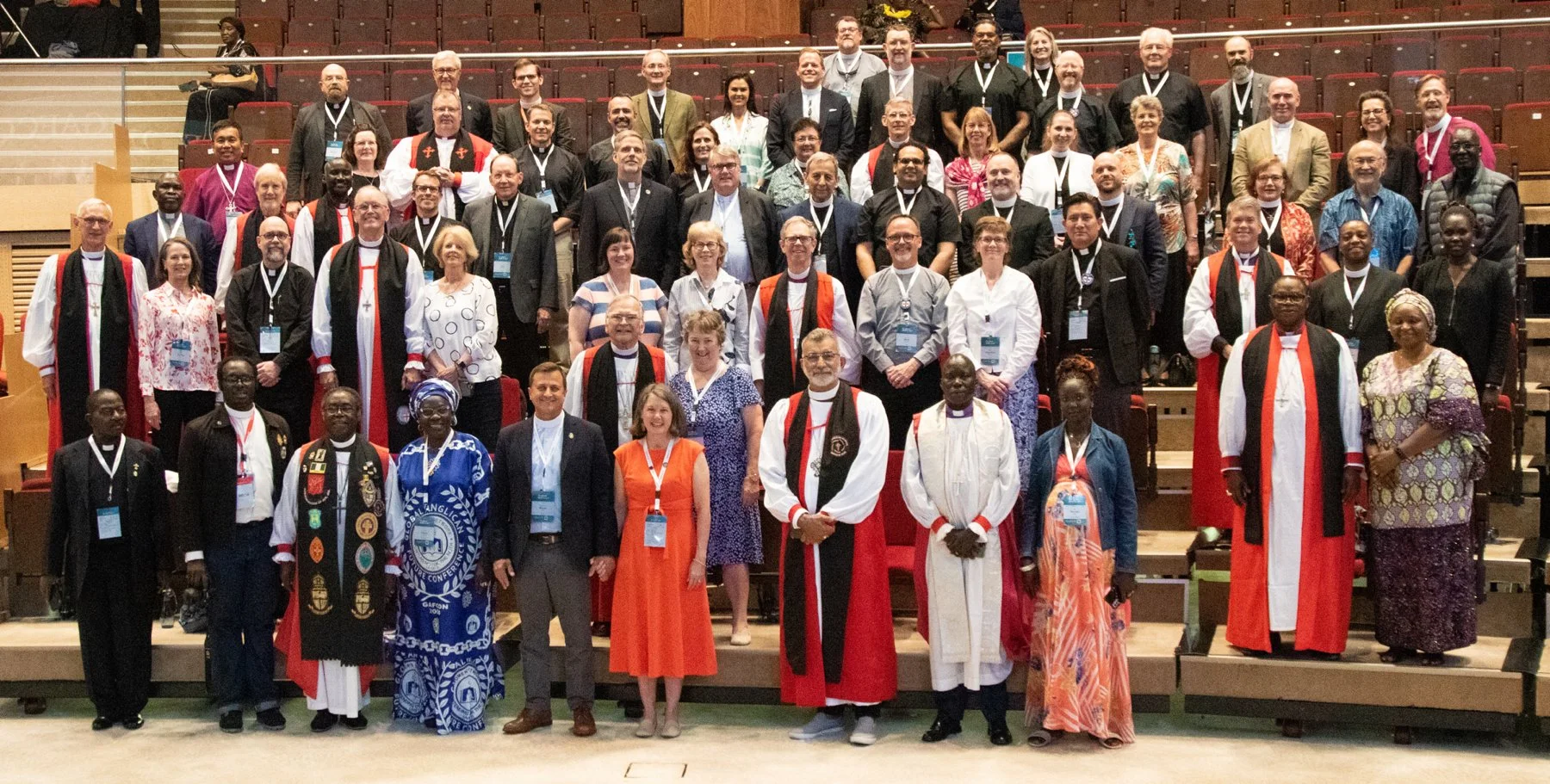
Trinity GAFCON Group
With almost a decade of quality theological education in a non-English speaking context behind us, Trinity has responded to the call to provide formation opportunities in other cultures and languages as well. Continuing his role with the Spanish Program, David Zamora also has agreed to share the lessons learned with those who would seek to train leaders in other unique contexts. This fall, we will be launching two new language programs, each described below by their respective Coordinators:
The Persian Academic Program
The emerging Persian-language program is not simply an additional academic provision. It forms part of a far wider narrative unfolding within the Persian-speaking Church, a movement from endurance under pressure towards theological renewal and maturation.

Trophimus Tour and Bishops Visit 6.25.24-36
For decades, many Persian-speaking believers have borne witness with remarkable courage and steadfastness in the face of constraint and adversity. In the present moment, however, there is a growing hunger not only for evangelistic expansion, but for deeply rooted and orthodox theological formation. The aim is no longer survival alone, but stability, depth, and continuity. Trinity’s Persian initiative seeks to serve this need by forming leaders who are biblically grounded, historically informed, theologically disciplined, and pastorally resilient leaders capable of sustaining communities over the long term.
The renewal now emerging is not merely increasing believers numerically; it is growing them intellectually, spiritually, and ecclesiastically. It reflects a transition from reactive faith to reflective faith, from urgency to depth, from immediacy to endurance. In this sense, the program represents more than a course of study. It stands as one modest-yet-meaningful contribution to a broader work of restoration and strengthening within the life of the Church.
–The Rev. Omid Moludy, Coordinator of the Persian Academic Program
The Portuguese Academic Program
In 2007, the year I completed my master’s degree at Trinity Anglican Seminary (then Trinity School for Ministry), I first spoke with some professors and staff members about helping to further the theological education of Anglicans in Brazil. At that time, under the leadership of Bishop Robinson Cavalcanti, we were witnessing the beginning of a realignment within the Anglican Communion. Rev. Marcus Throup—a former SAMS-UK missionary who later worked for CMS in Brazil—and I, therefore, dreamed of creating an educational program that would build on the training we already had in the Diocese of Recife and benefit other Brazilian Christians. There were more questions than answers at that time, but we had a deep conviction that the Spirit of God was doing something new among us.

Trophimus Tour and Bishops Visit 6.25.24
Today, after two decades of personal and ministerial growth and having become a student in the DMin program at Trinity, I have the honor of being invited to serve as Coordinator of the new Portuguese-speaking program of the International Pathways Initiative. With the blessing of my archbishop, the Most Rev. Dr. Miguel Uchoa—who also holds a Doctor of Ministry degree from Trinity—and my diocesan bishop, the Rt Rev. Dr Marcio Meira, we are finally bringing this project to fruition. Now, however, it is no longer a diocesan project, but it will be the project of an entire Province—the Anglican Church in Brazil. Our hope now extends beyond strengthening theological education among Brazilian Anglicans. We aim to be a blessing to all Christians who make up the Community of Portuguese Speaking Countries (CPLP) spread throughout the globe. We are living proof that God's timing is perfect for all His purposes. Please pray for the expansion of this project, which is so necessary in an increasingly globalized world, and for our Global Anglican Communion.
–The Rev. Gustavo L. Castello Branco, Coordinator of the Portuguese Academic Program
The Future Looks Bright

Bishops at TAS 6-25-24
The nearly 2.5 billion Christians in the world speak 82% of the languages used around the globe today, and as the church expands into frontier peoples, those who speak the other 18% of the world’s languages will likely be needing resources soon as well. While Trinity may never be able to meet all of the needs, we are already in conversation with church leaders representing the largest populations and the greatest needs to discover whom we might best serve next.
Of course, these new programs also create additional funding needs. Trinity is seeking scholarship support in order to be prepared to train the future leaders of the global church. To join Trinity as a partner in this ministry, please visit tas.edu/give and choose Other - Language Programs.
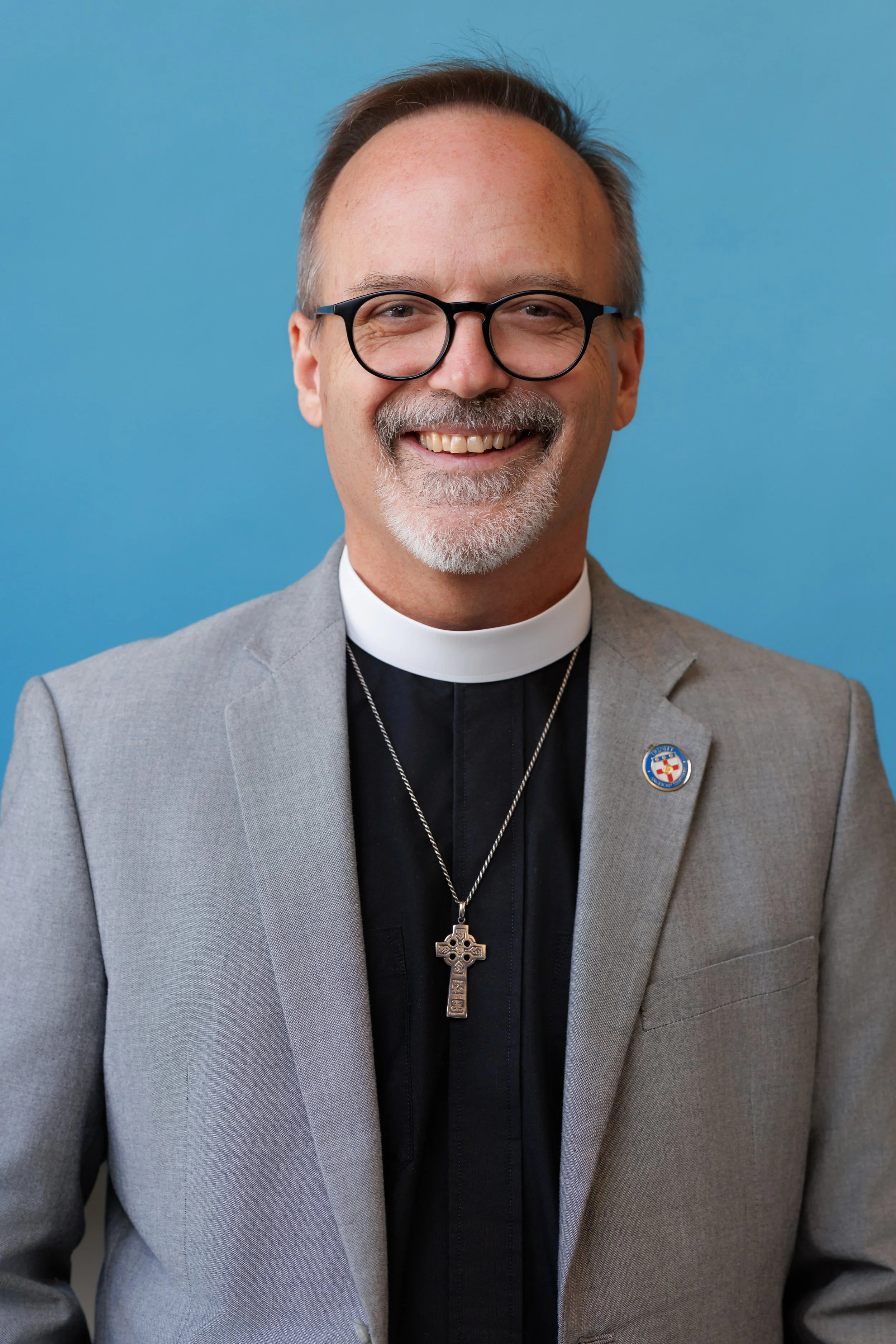
The Rev. Dr. Brad Roderick serves as the Vice President of Academic Affairs, the Director of the Stanway Institute for World Missions of Evangelism and Associate Professor of Missions at Trinity Anglican Seminary. He and his wife Gretchen served as both Home and Foreign Missionaries for 30 years prior to coming to Trinity.