The Resurrection at Work in the World
Every Easter, the Church proclaims the same ancient and astonishing truth: Christ is risen! He is risen indeed! For many in Western industrial nations, it is just a liturgical expression, but for millions of people around the world, Easter is not merely a liturgical declaration. It is the truth about a living Person.
I have been in ministry for over fifty years, and the most important truth I have discovered is this: The resurrection of Jesus Christ is not a metaphor. It is not a comfort story. It is the most disruptive, world-altering event in human history — and this Jesus Who rose, is still alive and eager to reveal Himself to hungry hearts!
The Man in White — Jesus is Revealing Himself Through Dreams and Visions
In recent years, something remarkable has been occurring across the Muslim world. Men and women from Morocco to Malaysia, from Iran to Indonesia, are waking from dreams. In those dreams, they encounter a figure dressed in white — luminous, commanding, full of compassion. They do not always know who He is. But they know He is unlike anyone they have ever encountered. They say that He is more beautiful than anything they have seen, and the love they experience is greater than anything they have experienced.
When they wake, many of them do the same thing: they open a browser and type the words, “Who is the Man in White?”
These are Muslim Background Believers — MBBs — and they are coming to faith in Jesus Christ by the millions through dreams and visions. They are not responding to a crusade, or a tract, or even a missionary. They are responding to the risen Christ himself, who apparently did not get the memo that the age of miracles is over.
At Ekklesia, we have built our new discipleship app around this exact moment — the moment an MBB wakes up, reaches for their phone, and asks the question that could change their eternity. The app begins with the question they are already asking: “Who is the Man in White?” It is available in seven languages — Arabic, English, Farsi, Fulani, Swahili, Turkish, and Urdu — and it costs just three dollars to put it in a new believer’s hands for free.
This is Eastertide evangelism in the twenty-first century.
The Hardest Part of Easter
But encountering the risen Christ is only the beginning of the journey. What happens next is often the hardest part.
A North African MBB and a lawyer met Jesus more than twenty years ago. When he reached out to Christians for fellowship, the message he got was blunt: “We don’t want you.”
Some Christians said, “People who look like you blow things up!” Others feared attacks from radicals if they welcomed MBBs. Others said conversion is illegal in their nation. “If we welcome you, our church will be closed.”
This is a tragedy. The risen Christ crossed locked doors to find his disciples in their fear (John 20:19). His Church should be capable of no less.
That is why Ekklesia has committed itself not only to the moment of encounter, but to the long road of discipleship that follows. We began producing pocketbooks on essential topics of the Christian faith — the authority of Scripture, the identity of Jesus, prayer, baptism, and more — designed for new believers who may not be able to walk through the doors of a traditional church. They need fellowship that is designed for discretion, but big enough to transform lives. Requests for materials to be translated into other languages became so numerous that we developed web-based resources and a smartphone app. New life in seven languages, with more translation requests coming in all the time. There are three Anglican Archbishops who are personally helping with the translation into their mother tongues!
We have also developed the Ekklesia Prayer Book, which has been described as “absolutely revolutionary,” because it includes catechetical (teaching) paragraphs woven all through the book, with explanations and teaching printed in green to make it easy to follow. Archbishop Paul Yugusuk, the Archbishop of the Central Equatoria Internal Province of the Episcopal Church of South Sudan called the new Prayer Book “an excellent resource for new converts because it provides so much teaching in addition to the liturgies.” He took 500 copies of the new book to Camp Kakuma across the border from South Sudan into Kenya, where he baptized 300 new converts and confirmed 700 the week before Christmas! Archbishop Paul said that “The new Prayer Book is exactly what was needed!”
More Than 40,000 People Have Now Been Through Ekklesia’s “Healing the Wounds of Trauma” Ministry
In conflict zones across Central and Eastern Africa, unspeakable traumas have been intentionally weaponized in tribal and religious wars. Women — and men — carry wounds so deep that the word “healing” can seem almost impossible. For years, Ekklesia has been sending teams to share “Healing the Wounds of Trauma” ministry (HWT). It is a multi-phase program that not only ministers healing grace to individuals, but trains others in this ministry. Fully equipped trainers are now raising up new generations of ministers of healing. Not only is it designed to help individuals experience healing, but it also demonstrates the power of forgiveness, through which some of the deepest traumas are healed and lives are transformed. In some areas, literally every single woman has been raped. HWT is impacting lives to equip local churches to transform their communities by breaking the cultural cycles of abuse and violence that keep communities trapped.
We have now reached a staggering milestone: more than 40,000 people have received Healing the Wounds of Trauma ministry.
The local church is not just a venue for this work. It is the agent of it. That is the resurrection vision: not foreign experts parachuting in, but local believers equipped to bring healing to their own communities, generation after generation.
Some Recent Highlights
Ekklesia is working with people like an ex-Imam who became a deeply committed follower of Jesus. For security, he now goes by the name he took at his Baptism: Timothy. The radicals were so incensed by “Timothy” abandoning Islam for Christ, that a fatwa — a formal sentence of death — was issued against him. Though he escaped certain death from Africa, his family, who did not have passports, could not leave. The radicals went to Timothy’s wife saying, “We cannot find your husband. We think he went to Canada, but we don’t know where. If you don’t tell us where he is, we will kill you and the children.” Timothy’s family is in hiding. The danger to them is genuine. The path to asylum is complex and expensive. This process faces legal bills of $15,000 plus costs for his wife and three children to travel from Africa. Through 30 years of contacts in Africa, we have identified a police officer in Timothy’s former country who is willing to testify on Timothy’s behalf. We also have a court-certified translator who is a strong supporter of Ekklesia — an international deposition by video call is being arranged. Progress is slow. It is difficult. It is expensive. But Ekklesia has not forgotten Timothy — or the many like him.
A young missionary who felt called to an extremely dangerous frontline field called his bishop, who called me. Through years of relationships, I reached the Archbishop of that region. Today, that missionary is serving there, ordained by that very Archbishop. Now, he is living out his life’s dream. And doing it very well.
Twelve seminarians graduated from their theological studies in Kenya, but had no money to get home. Ekklesia provided bus tickets for them to travel home to South Sudan. On the way, rebel fighting broke out and they were stranded. In just a few hours we were able to deliver $100 to each of them to pay for visas to reroute through Uganda and purchase additional bus tickets for a safe passage home.
An African UN executive once told me: “Ekklesia has a reputation for having huge impact accomplished with very modest resources.” He added, with a rueful smile, “My organization’s reputation is exactly the opposite.”
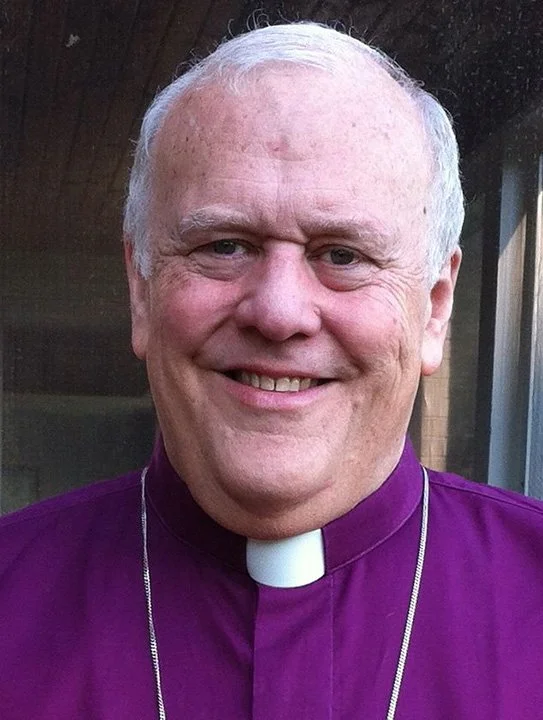
Bishop Bill Atwood is the founder and General Secretary of Ekklesia Society, a global Anglican mission and development network based in Frisco, Texas. Ekklesia's mission rests on three pillars:
Making disciples of Jesus Christ by proclaiming and defending the Gospel.
Building a network of senior Christian leaders who are committed to Gospel collaboration.
Pursuing sustainable development projects that address both spiritual and economic needs.
Among the innovative discipleship tools Bishop Bill has produced are numerous books and other resources, including the groundbreaking Ekklesia Prayer Book that has catechetical teaching woven all through it. While valuable for any discipleship setting, it is especially suited for discipling Muslim Background Believers. There is also a new smartphone discipleship app for Muslim Background Believers that is about to be released with resources in seven languages. His ministry is known for — in the words of a UN executive — "huge impact accomplished with very modest resources."